On the record
For years, when Inooro TV came to Thika for the street view, it kept finding the same man. Eventually it stopped finding him and started booking him, with a title on the screen.
Why it counts
It started in the street. Inooro TV kept finding the same trader in the crowd, willing to put his face on television and say the thing everybody at the stage was already saying quietly. He held no office. There was nothing protecting him, and his business was in the same town as the people he was criticising. He said it anyway.
Then the station stopped stopping him in the street and started sitting him down.
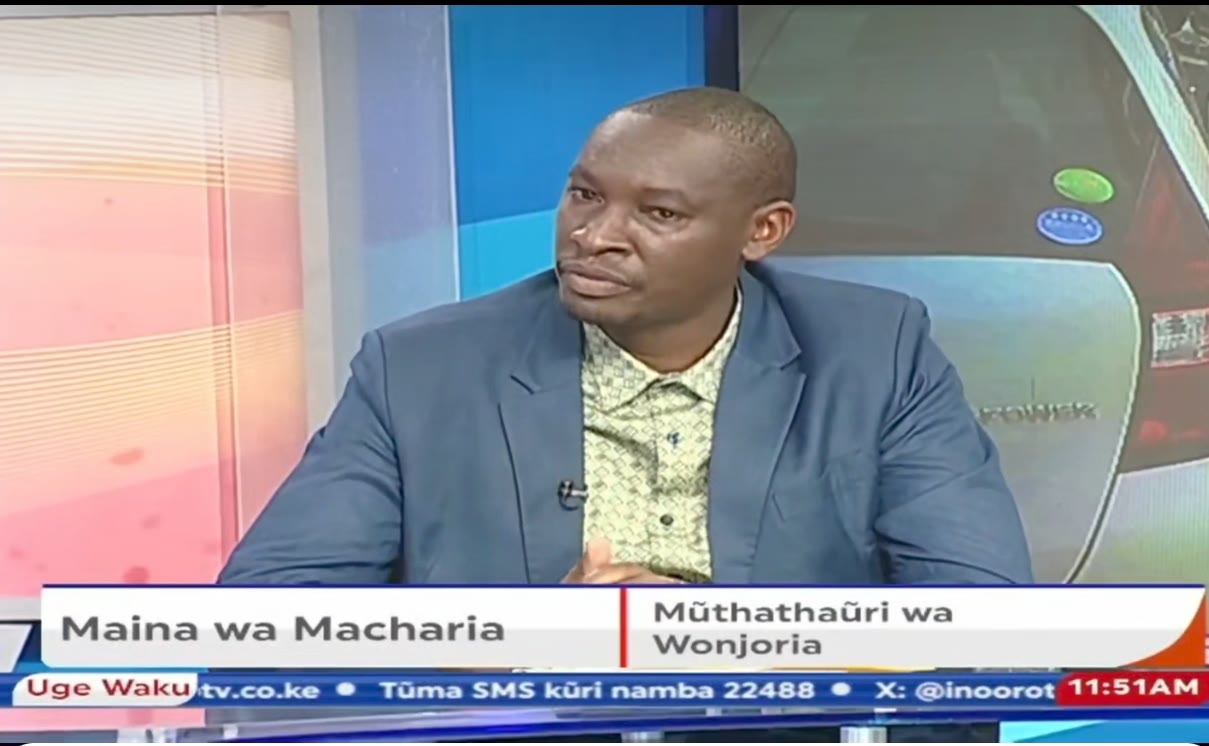
He did it repeatedly, in Gĩkũyũ, on the subjects that cost traders money. Three of them come back again and again.
The three subjects
A tow truck takes a working vehicle out of the economy for a day and charges the owner for the privilege. Maina argued the case for matatu owners and traders on air across two segments, on enforcement that punishes the person with the least room to absorb it.
Transport is the lifeblood of this town’s economy, and the stage is where it is either organised or left to chance. He has spoken about what taxis and matatus face there for years, which is why the night transport pledge in this manifesto is not a new idea.
Where public money goes, and who is watching it. This is the direct ancestor of the Published Ward: the same question asked from outside, now offered as an undertaking from inside.
Night transport, a published tender register, money that can be followed. Every one of these was a complaint Maina was making on television before it became a pledge on a website. A plan is easier to believe when you can watch it being argued for years earlier.
Watch
Appearances are in Gĩkũyũ. English subtitles come with the public launch.